
Fiscal Sponsorship
Who We Are & How We Work
The fiscal sponsorship program at Movement Sustainability Commons centers on strong relationships based on mutual support and accountability. Members of this ecosystem engage in partnership where groups voice their needs and share insights from their engagement with front line work, while MSC stewards shared-systems, resources, and practices, offering fiscal sponsorship and operational support shaped by member needs and grounded in front line realities. Our systems are live and organic - ever changing by who we serve and always focused on ensuring that they can thrive.
Fiscal sponsorship is often treated as a stopgap meant to help groups become independent 501(c)(3)s. This mindset pushes grassroots leaders to prioritize visibility and independence over collective impact, and isolated organizational success over collective thriving. Instead of this “up and out” framework where success is measured by how quickly a fiscally sponsored group becomes independent, we encourage an “up and in” approach that defines success by how deeply groups are resourced, connected, and supported to live their purpose and share their gifts. MSC is designed not as a place to pass through, but as a place to stay.
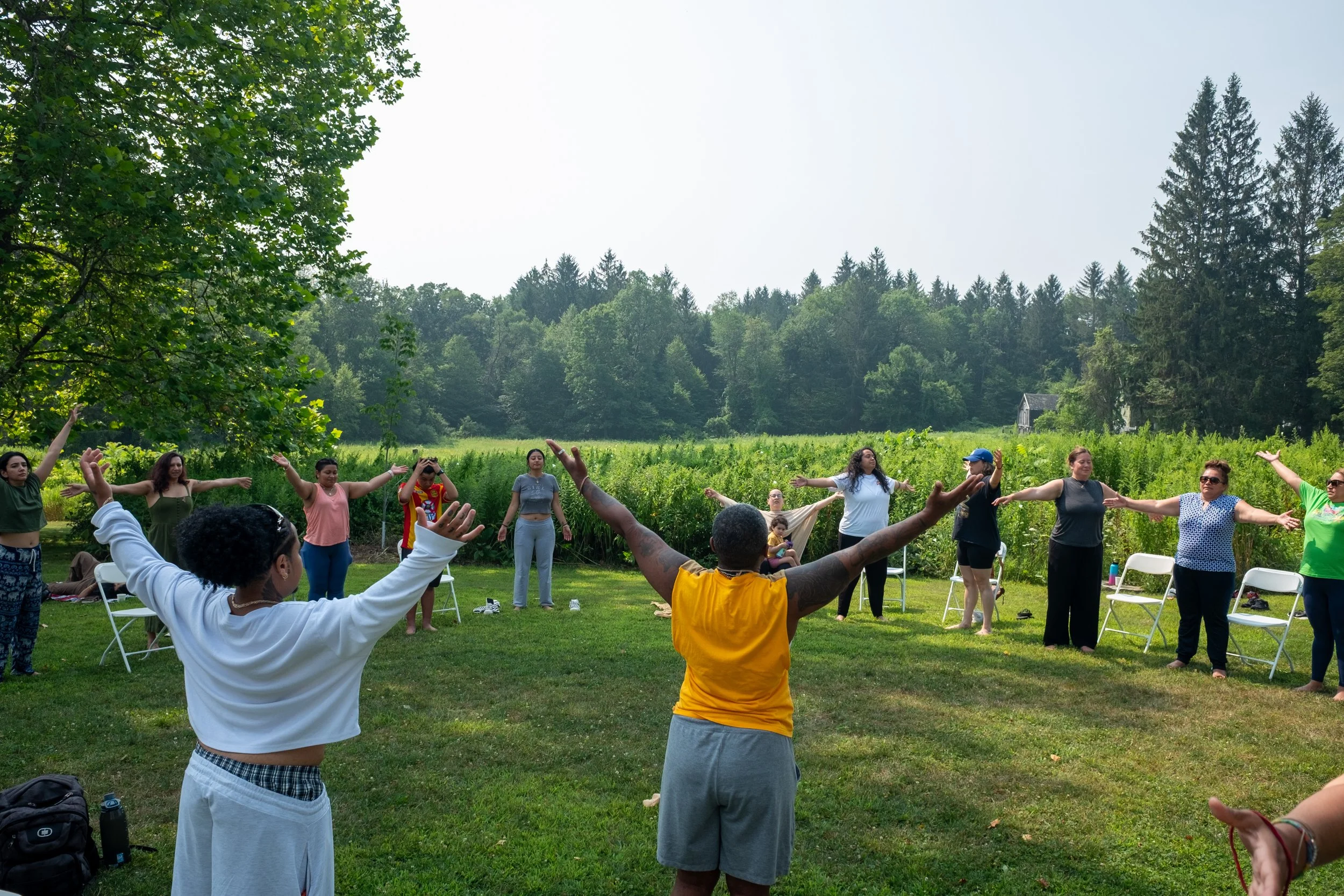
As part of our ecosystem, fiscally sponsored groups can access a number of resources, including:
Pooled access to higher quality insurance (Model A only)
Access to programming from the Circle of Elders
Connection to Resource Organizing Project
Contribute to the MSC shared governance model
Get priority access to Community of Care offerings, including the Restival, Community Circle, and the annual Grief Ritual
First access to new experimental infrastructure
Contribute to the development of new offerings
Types of Services We Offer
-
The fiscally sponsored project operates under the umbrella of the Commons and Resist’s status as a tax-exempt nonprofit organization.
Once fiscally sponsored, the project is no longer a separate entity.
The Commons accepts all legal, tax, fiduciary and Board-level governance responsibility for the project and its activities.
The service fee is 9%, with a reduced rate of 7%, for the first $150,000 of income
-
This relationship allows the fiscally sponsored project to pursue funding through charitable contributions with the understanding that the Commons will receive the funding and re-grant it to the project.
The project maintains a separate legal identity from the Commons.
The project is responsible for its own governance, filings, risk and liability.
The service fee is 5% of total annual income
-
Occasionally, the Commons will fiscally sponsor groups seeking fiscal sponsorship on a one-time or time-limited basis. These services are intended to be nimble and responsive to moments of crisis or opportunity.
Projects operate with either comprehensive or re-granting services as determined by need.
The service fee is determined on a case-by-case basis depending on services required.
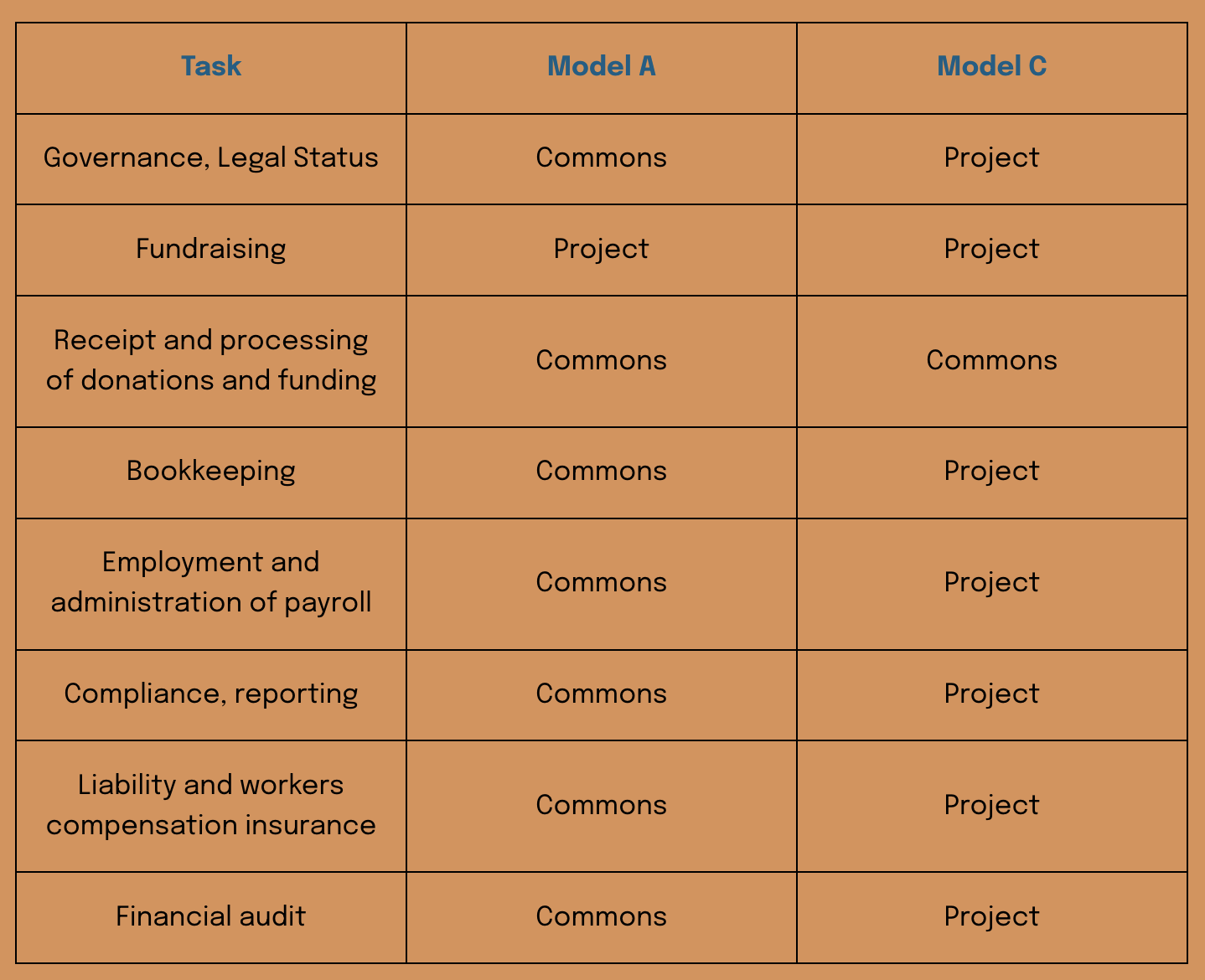
Breakdown of responsibilities based on type of fiscal sponsorship
Who We Work With
Movement Sustainability Commons sponsors projects that are aligned with our mission and with laws governing tax-exempt activities.
Projects may be:
Established groups, projects or campaigns that do not have 501(c)(3) status
Established groups that are interested in sunsetting their 501(c)3 status
Organizations or partnerships that are starting up new tax-exempt activities
Efforts seeking one-time or time-limited sponsorship
We do not fiscally sponsor projects that:
Do not align with our mission, vision and values
Do not abide by laws governing tax-exempt activities
Have international activities involving financial transactions
Primarily benefit a for-profit business or a non-charitable purpose
How to Apply
The Commons uses Resist’s grantmaking guidelines, listed below, in consideration for all fiscal sponsorship applicants. That being said, we intentionally hold nuance in reviewing each application.
Their work is located within an ecology of social justice organizations. They are aware of how their work fits into a greater whole. Work reflects a clear understanding of purpose and function within movements for social change
Have an intersectional / cross-issue analysis
Work actively against white and Christian supremacy, capitalism, gender and sexual oppression, and all forms of patriarchy
Are led by those most affected by structural oppression
Additionally, the Commons at this time prioritizes groups located in New England (CT, MA, ME, NH, RI, VT). If you are interested in fiscal sponsorship and are outside New England, please contact us before applying.
There are 2 steps to apply for fiscal sponsorship with the Commons:
Read through fiscal sponsorship documentation to discern if MSC is a good fit for your project
Submit an application form
Our team will review application submissions and request follow up meetings as needed. Applications will be processed on a rolling basis, which will take 1-2 months to process.
September 2026 Update: Our application is currently on pause as we orient new groups that have joined this year. If you’re interested in our fiscal sponsorship program, please submit an inquire through our waitlist intake form.
For more information, please contact: Gabriella Gilbert - fs@sustainmovements.org
Our Fiscally Sponsored Groups









In Solidarity
Liberating Investment in the Food and Farm Ecosystem (LIFE)
Movement Family Farm
Mujeres Victoriosas
Neighbors United for a Better East Boston (NUBE)
Tierra Viva